
Call Us: 443-461-4466
New Construction Loans for Real Estate Investors
Fast, flexible financing for ground-up projects with nationwide funding, quick approvals, and investor-focused loan terms.
Interest-Only Payments: During the 12–18 month build phase, borrowers typically only pay interest on the funds actually disbursed. This keeps monthly costs low while they are potentially still paying rent or a current mortgage.
One-Time Closing (C2P): The Construction-to-Permanent (C2P) loan is the gold standard. Borrowers close once, pay one set of closing costs, and the loan automatically converts to a 15- or 30-year mortgage upon completion.
Rate Lock Security: Many 2026 products allow borrowers to lock in their long-term mortgage rate before the first shovel hits the ground, protecting them if rates rise during the year-long build.
Customization Power: Unlike buying existing inventory, every dollar borrowed goes toward a home built to modern energy codes (crucial for 2026 insurance and utility savings) and personal specifications.
Equity from Day One: If the "as-completed" appraisal comes in higher than the build cost, the borrower starts their mortgage with instant home equity.
Borrower Requirements
Lenders view construction as "high risk" because there is no finished house to serve as collateral if things go south. Consequently, requirements are stricter than standard mortgages.

Credit Score
680 – 720+
Scores below 680 often face much higher rates or require a 25% down payment.
Down Payment
20% – 25%
FHA/VA options exist (3.5% or 0% down), but conventional builds usually require 20% of the total land + build cost.
Debt-to-Income (DTI)
Max 43% – 45%
Lenders are strict here to ensure the borrower can handle the "end loan" payments.
Cash Reserves
6 – 12 Months
Proof of "reserve" cash after closing to cover unexpected cost overruns.
How it Works
ask us anything!
Got questions? We're here to help! Whether it's about mortgage rates, plans, or the process, feel free to ask us anything. We're ready to guide you every step of the way!
443-461-4466
Tell us about your Project
Get Your Personalized Investment Strategy Here!
The "Project Package" (Necessary Documentation)
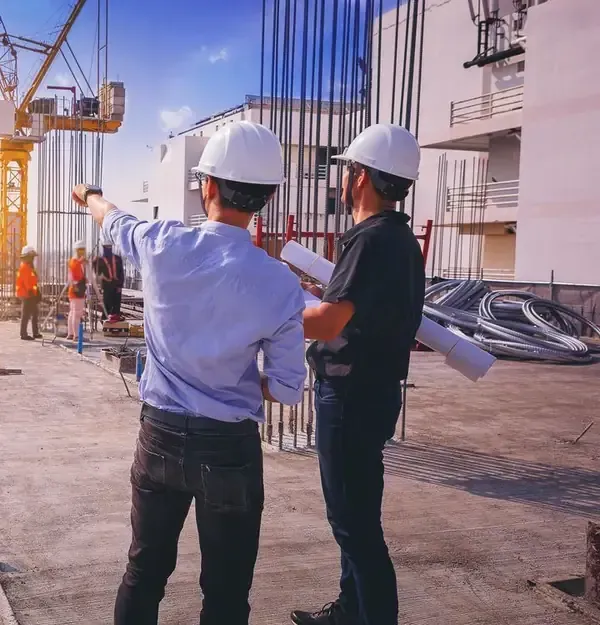
You cannot get a construction loan with just a bank statement. The lender must "approve" the project and the builder.
The Builder’s Files
Builder Credentials: License, proof of General Liability insurance, and Worker’s Compensation.
Resume of Experience: Many 2026 lenders require the builder to have completed at least 3-5 similar projects in the last 24 months.
Signed Fixed-Price Contract: Lenders hate "cost-plus" contracts; they want a guaranteed maximum price to minimize risk.
The Project Files
Blueprints & Specs: Professional architectural plans and a "spec book" detailing every material (from the type of insulation to the brand of faucets).
The "Draw Schedule": A timeline of when the builder gets paid (e.g., 10% after foundation, 20% after framing).
Line-Item Budget: A granular breakdown of every cost, including a 10%–15% contingency fund for surprises.
In summary, a construction loan is not an easy process to go through
The Land Factor: If the borrower already owns the land, the equity in that land can often count toward their down payment.
The Appraisal: Mention that the appraisal is "subject to completion." The appraiser looks at the plans and the dirt and estimates what the house will be worth.
Inspection Draws: Explain that the lender will send an inspector to the site before releasing money to the builder at each stage to ensure the work was actually done.
Testimonials

— Michael R.
I had an incredible experience with them]. The team was attentive and helped me navigate the mortgage process smoothly. Thanks to their expert guidance, I was able to secure my dream home without any hassle. Highly recommend!


— Sarah T.
The support I received from them was outstanding! They took the time to understand my needs and found the perfect financing solution for my investment property. I couldn't have done it without them!
Frequently Asked Questions
What is a new construction loan?
A new construction loan is a short-term loan used to finance the building of a property from the ground up, covering costs such as land, materials, and labor.
How does a construction loan work?
Construction loans are funded in stages through a draw schedule. Funds are released as construction milestones are completed, and the loan is typically repaid or refinanced after the project is finished.
What is included in a new construction loan?
New construction loans may cover land acquisition, building materials, labor costs, permits, and other expenses related to constructing a property.
How are construction loan funds disbursed?
Funds are disbursed in phases, known as draws, based on completed construction work and inspections at each stage of the project.
What is a draw schedule in construction loans?
A draw schedule is a pre-approved plan that outlines when funds will be released during the construction process, typically tied to project milestones.
Do construction loans cover land purchase?
Some construction loan programs allow for land acquisition to be included as part of the total loan, depending on the project and lender guidelines.
Are payments required during construction?
Many construction loans offer interest-only payments during the build phase, helping investors manage cash flow until the project is completed.
What credit score is required for a construction loan?
Credit requirements vary by lender, but construction loans are typically available to borrowers with moderate to strong credit profiles. We have lenders who can do construction loans with a 620 score or higher, it may depend on experience and strength of the project.
Do I need building experience to qualify for a construction loan?
While prior experience can improve approval chances and loan terms, some programs allow newer investors or builders to qualify depending on the strength of the project.
Can real estate investors get construction loans?
Yes, construction loans are commonly used by real estate investors and developers to build residential or investment properties.
Can I build a home to rent using a construction loan?
Yes, investors can use construction loans to build rental properties and then refinance into long-term financing once construction is complete.
Can I build and sell using a construction loan?
Yes, construction loans are commonly used for build-to-sell strategies, where the property is sold after completion to generate profit.
What happens after construction is complete?
After construction is complete, the loan is typically repaid through the sale of the property or refinanced into a long-term loan, such as a rental property loan.
How long do construction loans last?
Construction loans are usually short-term, often lasting 6 to 18 months, depending on the scope and timeline of the project.
Can I refinance a construction loan into a long-term loan?
Yes, many investors refinance construction loans into long-term financing options after the project is completed and stabilized.
Efundhomes LLC — Premier Hard Money Broker for Real Estate Investors
Fast, reliable funding for
Social Media


